

35 Weeks
July 11, 2026 By Shannon Rizek
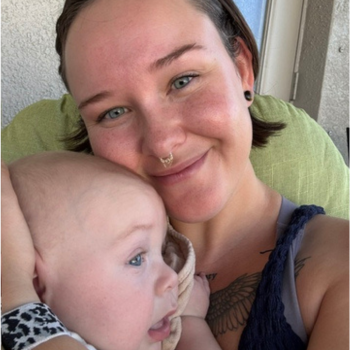
My pregnancy was planned—we conceived on our first try. All was well and medically uneventful until I ended up at the hospital for gestational hypertension. Days earlier, I had begun swelling, and my morning sickness returned. A coworker of mine that experienced preeclampsia herself had previously told me her story, and I was able to recognize these warning signs. I then began monitoring my blood pressure at home. I was unaware that my history of autoimmune disease was a risk factor.
Once diagnosed with gestational hypertension at 34 weeks and 3 days pregnant, I was able to receive steroid injections to mature my baby’s lungs to prepare for a probable preterm delivery. Our goal was to make it to 37 weeks. The plan was to go in for a stress test twice a week to monitor my blood pressure and the baby. We ended up back at the hospital nearly every day due to my at-home blood pressure readings.
I am grateful that I was supported and validated every step of the way, by both my medical providers as well as my loved ones and my doula. The only exception being the night prior to my delivery, I went to L&D for blood pressure readings in the critical range along with visual disturbances. There was a shift in the energy from my previous admissions. Even though I was seen at the same hospital nearly every day that week, they questioned why I had come in. When I began to explain my previous admissions and the care plan I was given, the nurse told me I was “fine” and I didn’t “actually have preeclampsia” only gestational hypertension. Due to all the support and reassurance I had previously received, I was comfortable advocating for myself. That night, I was in fact diagnosed with preeclampsia when my blood work came back. The following day, I delivered.
We made it to 35 weeks 0 days. That was the earliest that the hospital was able to deliver babies as they don’t have a NICU. My baby had been breech, so we bypassed an induction, and I was taken directly for a C-section. My baby was whisked away immediately, and I was unable to see him until the following morning.
My son was born experiencing difficulty breathing. The closest NICU was at capacity. My son was transferred over an hour away to [another hospital] for care while I was stuck being treated for preeclampsia as delivery didn’t lower my blood pressure.
The next day, I was discharged on a medication to control my blood pressure and was able to join my baby and my husband [at the hospital]. I feel extremely fortunate that my separation from my son was only a short time, but the feeling I experienced when they took him away was the most raw, primal distress I have felt in my life.
I continued to monitor my blood pressure closely as I was advised. A few days later, my blood pressure was once again within the range of preeclampsia even on blood pressure medication. My son’s nurses in the NICU encouraged me to get seen in triage. Even though my blood pressure was higher than it was at delivery and my blood work didn’t look great, I was given an extra dose of my blood pressure medication and discharged with a prescription for Lasix for my swelling. I was advised to return the next day for repeat labs. When I returned to triage, I was immediately admitted for postpartum preeclampsia. The Hospitalist reviewed my chart upon my arrival and told me that I should’ve never been sent home.
The silver lining to my readmission was that my son was ready for discharge from the NICU, so he was able to come up to my room, and we could finally truly start to bond as a family.
After a second magnesium drip and several days of trying different combinations of blood pressure medications, I was able to be discharged home. Within a few weeks, my blood pressure had returned to normal, and I was able to come off of my medication.
After learning about the increased cardiovascular risks associated with preeclampsia, I have started a health journey to mitigate my risk factors. I came to this information through my own research. I wish this was shared with me by my medical providers so I could have begun making changes sooner.
I would love to see policy change to keep mothers and babies together. I strongly believe this would lead to improved outcomes for both parties. It certainly did not help my blood pressure to be separated.
Today, I am happy to report that we are both happy and healthy. I am forever grateful to my coworker sharing her story with me and the support of all of those around me that supported me in seeking care. I believe it truly saves lives to listen to expectant mothers and not dismiss concerns without thorough evaluation.
I didn’t have the most classic of symptoms with my preeclampsia. If I had not been in tune with my body and very cautious medically - m...
ReadMore- From Bad To Worse August 15, 2026
- My Preeclampsia Story August 15, 2026
- Recurring Preeclampsia August 11, 2026
- Laynie’s Birthday August 11, 2026
- My Experience With Post-Partum Pre-Eclampsia August 11, 2026
- I Should Have Advocated More August 11, 2026
- Just Another Day. August 11, 2026
- Listen To You Body August 11, 2026
- Twenty-Five Weeks Changed Everything August 11, 2026
- Pppe, Hellp & DIC August 11, 2026