

When Pregnancy Becomes A Battlefield : My Pre-Eclampsia Story
February 21, 2026 By Anita Sabidi
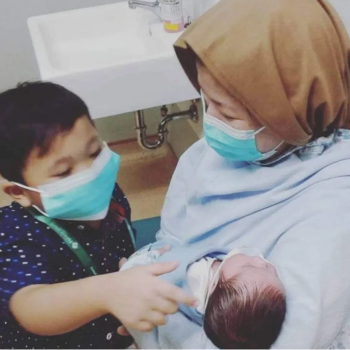
Motherhood is often described as beautiful, instinctive, and natural. For me, it was also clinical, fragile, and life-threatening.
I am living with Type 1 diabetes. I understood high-risk pregnancy in theory — the guidelines, the glucose targets, the HbA1c discipline. But nothing truly prepares you for when obstetric complications escalate beyond numbers and into survival. This is my pre-eclampsia story.
Baby #1 — 34 Weeks, Placental Abruption, Emergency C-Section
Fifteen years ago, during my first pregnancy, I developed severe complications that progressed into placental abruption — a condition where the placenta detaches from the uterus before delivery. It was sudden. It was critical. It was no longer about birth plans — it was about saving two lives. At 34 weeks, I underwent an emergency C-section. My son was born premature and immediately admitted to the NICU. He spent one full month there.That month redefined me. I learned to read monitors instead of lullabies. I learned the language of oxygen saturation and feeding tubes. I learned that strength sometimes looks like sitting quietly beside an incubator, praying your body has not failed your child. He survived. He is now 15. But my body had already shown signs that pregnancy for me would never be “routine.”
Baby #2 — 32 Weeks, Organ Failure, and Nearly a Stroke
Ten years ago, during my second pregnancy, complications began even earlier. At 27 weeks, I started experiencing early contractions. I was hospitalized and placed on strict bed rest for five weeks. Five weeks of immobility. Five weeks of monitoring. Five weeks of hoping we could buy more time. But my body began shutting down. I experienced organ failure. My blood pressure escalated dangerously. The risk of stroke became real — not theoretical. At 32 weeks, I delivered my second son. I nearly had a stroke. This was not just preterm labor. This was severe pre-eclampsia with systemic consequences. My son spent time in NICU. He is now 10 years old — strong, bright, resilient. But my health never fully returned to baseline.
The Aftermath: Living with Cardiomyopathy and Chronic Kidney Disease
Pregnancy complications do not always end after delivery. For me, pre-eclampsia left permanent damage. I am now living with: Cardiomyopathy Chronic Kidney Disease These are not temporary diagnoses. They are lifelong companions. Pre-eclampsia is often framed as a pregnancy complication. Clinically, we now know it is also a predictor of long-term cardiovascular and renal disease. Women like me do not just “recover.” We transition into chronic illness management. As someone already living with Type 1 diabetes, this layered complexity reshaped my health trajectory entirely.
What Pre-Eclampsia Taught Me
Pregnancy can reveal underlying vascular vulnerability. Women with chronic conditions require integrated, multidisciplinary care. Survival is not the end of the story — long-term follow-up matters. NICU mothers carry invisible trauma long after discharge. High-risk pregnancy care in Indonesia and many LMICs still needs systemic strengthening. As a mother of two boys — now 15 and 10 — I look at them and see miracles. But I also see data. I see how maternal health, chronic disease, and access to specialized care intersect. I see how early warning systems, screening, and postpartum cardiovascular monitoring should be standard — not optional.
Why I Share This
Because pre-eclampsia is not rare. Because maternal morbidity is under-discussed. Because women living with diabetes deserve anticipatory counseling about cardiovascular and renal risks. Because survival stories should include what happens after discharge. Motherhood almost cost me my life — twice. Today, I live with cardiomyopathy and chronic kidney disease.
I manage medications, monitor labs, and continue advocacy. But I also live with gratitude. And data-backed conviction: Maternal health is not just about delivering a baby.
In 2024, my husband and I received our long-awaited answered prayer—the pregnancy and birth of our first child, our daughter, Shira. Wh...
ReadMore- Grateful April 27, 2026
- Preeclampsia Is Silent April 27, 2026
- Heart Surgery 2 Days After Hellp Syndrome C-Section April 27, 2026
- Taylor’s Story April 27, 2026
- The Headache April 27, 2026
- Pre-Eclampsia and Hellp Syndrome and No Symptoms April 24, 2026
- Life-Saving Kidney Stone April 24, 2026
- Through Preeclampsia, Three Times April 23, 2026
- Preeclampsia: the One Who Walks In Without Knocking April 23, 2026
- No Warning Signs April 14, 2026