

My Journey Through Preeclampsia and Survival
May 27, 2026 By Cheryl Steinberg
I waited until my late thirties to have a child. Because of my age, I was eventually referred to a high-risk OBGYN in 2015. In the beginning, I asked her a lot of questions. She briefly mentioned preeclampsia but brushed it off, making it seem like a rare issue that wouldn’t happen to me. But by the second trimester, I began to blow up with massive fluid retention and edema, looking like I was in my third trimester. I was also vomiting every single day. When I asked about IV fluids for hydration, my care team dismissed it: *“Just drink water and Gatorade.”*
Soon, my doctor had me coming in every single week for urine samples, blood work, and sonograms. The frequency increased, but the communication didn't. I was left completely in the dark until the day the guessing game abruptly ended and I was officially admitted to the hospital at 32 weeks. Only then did they tell me the truth: *You have developed preeclampsia.* I felt a wave of anger. I realized my doctor had seen this coming yet chose silence—perhaps because I manage anxiety and depression and she didn't want to spike my blood pressure. But the consequence of trying to protect me from fear was that I was left completely uninformed.
In Labor and Delivery, the reality hit with terrifying speed. Suddenly, they were prepping me for surgery and my husband wasn’t allowed in the room. Consumed by fear, I tried my best to meditate and take deep breaths. Slowing my panic helped bring my blood pressure down. I was transferred to the labor and delivery ICU and placed on a magnesium sulfate drip—meaning no food, constant monitoring, and being confined to a hard gurney built for surgery. The drip made my body feel unbearably hot; I needed an electric fan just for relief.
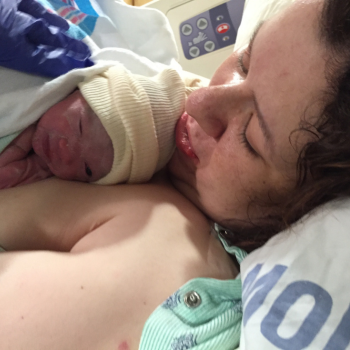
By week 34, my high-risk doctor was MIA. A hospital resident came in on Thanksgiving eve, noting that my labs and blood pressure required an immediate induction. On November 27th, my Thanksgiving baby entered the world weighing just 4 pounds, 8 ounces. Because of severe preeclampsia risks and a threat of HELLP syndrome, my moments with my son were stolen; I held him for only a few minutes before he was rushed to the NICU and I was put back on magnesium.
With private insurance, the standard discharge limit after delivery is just two days. Even though I felt weak from severe blood loss, the clock ran out. Leaving the hospital with empty arms while my baby stayed in the NICU for another two weeks was a specific kind of trauma. A few days later, my blood pressure spiked again at home. I rushed to the ER and was readmitted to L&D, facing threats of a blood transfusion and more magnesium as my body fought off postpartum HELLP syndrome.
I did not feel like myself for four years after that pregnancy. Later, a cardiologist advised against having another child due to my family history of stroke and the high risk of redeveloping severe preeclampsia. I am happy being a mother to my wonderful son, but the medical community's lack of transparency permanently altered my family's future.
I am sharing this with the Preeclampsia Foundation because true maternal safety begins with absolute transparency. We are not fragile statues to be handled with omissions; we are mothers who deserve the unvarnished truth so we can advocate for our lives. To the women who have felt the heat of a magnesium drip or cried the entire ride home from the hospital: your fear is valid, and you are not alone.
We didn't think we were going to be parents. After six years of hoping and four years of waiting to adopt, we got a...
ReadMore- The World's Slowest Marathon October 15, 2026
- The Appointment That Changed Everything October 10, 2026
- Maia’s Birth Story October 10, 2026
- I Had No Clue What Eclampsia & Hellp Syndrome Were September 25, 2026
- Why I Walk September 25, 2026
- The Best & Worst Day September 25, 2026
- I Walk for My Son, Owen September 22, 2026
- Servere Preeclampsia At 19 Weeks September 05, 2026
- My Truth With Preeclampsia and Hellp Syndrome September 05, 2026
- Something Wasn't Right September 05, 2026