
Could a new blood test help rule out preeclampsia?
Promising New Test May Help to Rule-Out Suspected Preeclampsia in At-Risk Pregnant Women
To diagnose preeclampsia, healthcare providers rely on measurable signs: a woman’s blood pressure, the amount of protein in her urine, and tests for how well her organs are working (specifically, lungs, kidneys, liver, brain, and platelets in her blood). These diagnostic criteria can sometimes be less than ideal for a few reasons:
- they may fluctuate during the time period of observation,
- their measurement can be subjective, and
- they can be sensitive to errors when collecting.
An accurate preeclampsia diagnosis is important: women with suspected preeclampsia who may not actually have preeclampsia could be unnecessarily admitted to the hospital for monitoring or even delivered prematurely.
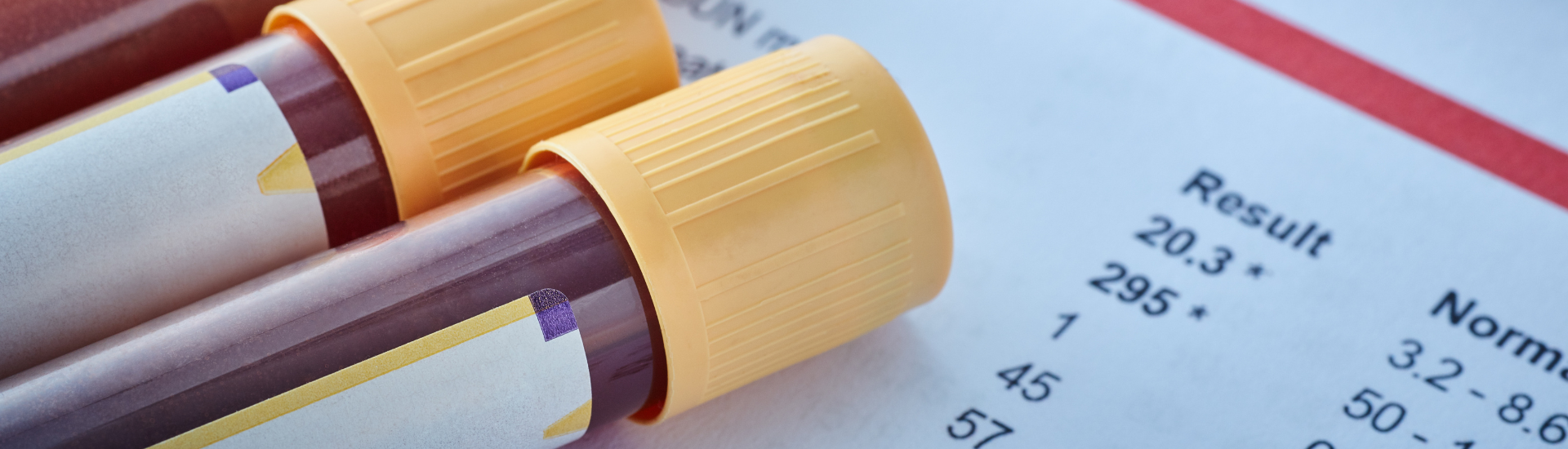
Researchers in this recent study asked if a new blood test could rule out a diagnosis of preeclampsia in at-risk pregnant women presenting with signs and symptoms of preeclampsia.
The test is novel because it measures eight different markers that link to the mechanisms likely causing preeclampsia. The test measures three blood vessel growth factors, two placenta function factors, one hypoxia (lack of oxygen) factor, and one inflammation factor. To answer this research question, 1,036 pregnant women between 28-36 weeks of pregnancy with suspected preeclampsia (new or worsening high blood pressure, new or worsening protein in urine, and other signs or symptoms that needed evaluation to rule out preeclampsia) completed this study across 20 different sites in the United States. The patients were followed after the test to see if they went on to be diagnosed with preeclampsia. Researchers found that the test had a high negative predictive value, meaning 95% of those who tested negative for preeclampsia with this new test would actually not have preeclampsia for the 7 days after testing.
Take home message: This is a large, well-designed, multi-site study showing promising results for a new test to rule out preeclampsia among women with suspected preeclampsia. This could be a useful test to use in clinical settings to avoid unnecessary admissions to the hospital for monitoring or even premature delivery.
Citation: Costantine MM, Sibai B, Bombard AT, Sarno M, West H, Haas DM, Tita AT, Paidas MJ, Clark EAS, Boggess K, Grotegut C, Grobman W, Su EJ, Burd I, Saade G, Chavez MR, Paglia MJ, Merriam A, Torres C, Habli M, Macones G, Wen T, Bofill J, Palatnik A, Edwards RK, Haeri S, Oberoi P, Mazloom A, Cooper M, Lockton S, Hankins GD. Performance of a Multianalyte 'Rule-Out' Assay in Pregnant Individuals With Suspected Preeclampsia. Hypertension. 2022 May 12:101161HYPERTENSIONAHA12219038. doi: 10.1161/HYPERTENSIONAHA.122.19038. Epub ahead of print. PMID: 35545947.
About Research Roundup
Each quarter, our team of researchers reviews the most current studies related to hypertensive disorders of pregnancy and selects those studies they feel will be of greatest interest to our community to summarize.
Special thanks to our volunteer research team, who under the leadership of Dr. Elizabeth Sutton, make Research Roundup possible: Alisse Hauspurg, MD Felicia LeMoine, and MD Jenny Sones, PhD, DVM.

Related Articles
1785353792.png)
Preeclampsia is a serious complication of pregnancy that can affect a woman’s health beyond pregnancy. For a long time, it has been clear that women who experience preeclampsia have a greater ch...
1785337209.png)
Black women in the United States experience preeclampsia more often and are more likely to experience severe complications from it than White women. Traditional risk factors, such as high blood pressu...
1785336951.png)
High blood pressure disorders during pregnancy, including preeclampsia and gestational hypertension, are common complications that affect approximately 5–10% of pregnancies. Although these condi...
1785336695.png)
Preeclampsia is a serious pregnancy complication that causes high blood pressure and can harm organs like the kidneys, liver, and brain. It affects thousands of pregnancies every year and remains one...

Hypertensive disorders of pregnancy, such as high blood pressure during pregnancy, are a major cause of illness and death for mothers. It is important to find women who are at risk as early as possibl...